The Ultimate On-Page SEO Checklist for 2025 (Tried & Tested)

On-page SEO is all about making your web pages as appealing to search engines as they are to your audience. A solid on-page SEO checklist helps you optimise each page element, ensuring search engines can understand and rank your content effectively. Focusing on the right on-page factors can improve your page’s chances of driving more organic traffic. It also lays the foundation for other SEO strategies, such as link building, to be more effective.
On-page SEO can be divided into three key areas:
- Content
- HTML
- Website architecture
1. Content
Content is the heart of any on-page SEO checklist, as it directly influences how well your page resonates with both search engines and users. By focusing on creating high-quality & informative content, you provide value to your audience while signalling relevance to search engines. The following aspects are key to producing content that ranks well and engages users:
Building E-E-A-T
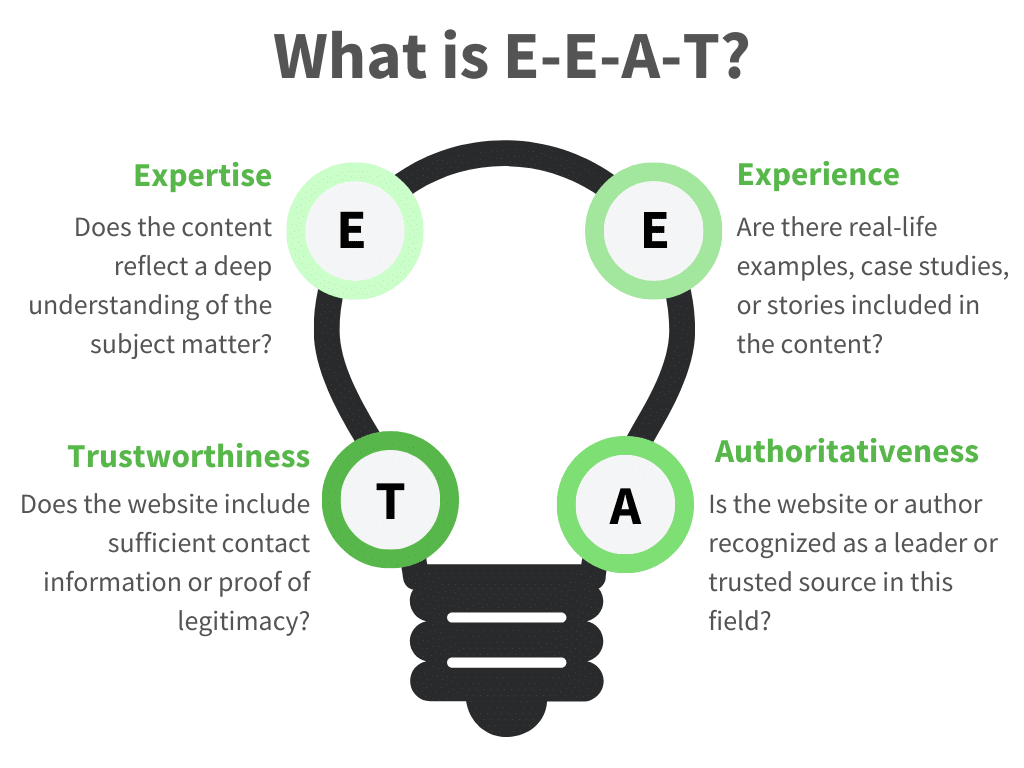
E-E-A-T stands for Experience, Expertise, Authoritativeness, and Trustworthiness. It’s a critical concept used by Google to evaluate the credibility of your content, especially for topics related to health, finance, or other sensitive areas known as Your Money or Your Life (YMYL) topics.
Experience
Showcase first-hand experience within your content. Content that includes insights from personal experience or expertise demonstrates authenticity, which Google values highly.
Expertise
Make sure your content reflects true subject matter expertise. This can be enhanced by adding author bios that explain the credentials and background of the content creator, establishing them as a knowledgeable source.
Authoritativeness
Authority is earned when your content comes from recognised experts in the field. Build this by highlighting qualifications, providing reliable information, and having dedicated author pages listing their contributions and credentials.
Trustworthiness
Build trust by being transparent about who is behind the content and why it was created. Include clear disclaimers when needed, and always cite reputable sources. Linking to credible journals, respected news outlets, or original studies can significantly boost trustworthiness.
Ensuring your content meets these E-E-A-T standards can create a solid foundation for better visibility on search engines, especially for topics impacting users’ well-being and financial decisions.
Optimising keywords for search intent
Keywords help search engines understand your content’s relevance to users’ queries. To make the most out of keywords, focus on the following strategies:
Enrich your content by including related phrases and keywords that provide a broader context. For instance, if you offer cloud data storage services, consider adding terms like “backup solutions,” “disaster recovery,” and “data management” to cover all possible areas of user interest.
Understand context and intent
It’s important to understand what users are truly searching for. A term like “cloud migration” could have various intents, such as looking for a step-by-step guide, pricing information, or migration strategies. Make sure your content addresses these different intents to satisfy user needs fully.
Provide comprehensive answers
Cover subtopics that are naturally related to your primary keyword. By addressing related questions and providing in-depth answers, you not only improve your chances of ranking higher but also create content that serves as a valuable resource for users, which search engines reward.
SEO-optimised content writing
Effective SEO writing is about producing content that is not only optimised for search engines but also easy and enjoyable for your audience to read. Here are some key techniques to improve your SEO writing for on-page SEO:
- Emphasize readability: Make content easily scannable for quick information retrieval.
- Avoid keyword stuffing: Overusing keywords can lead to penalties or removal from SERPs.
- Keep it brief: Short sentences and paragraphs prevent overwhelming readers.
- Use subheadings: Guide readers with clear, attention-grabbing subheadings.
- Use bullet points: Break information into digestible chunks with bullet lists.
- Add personal experience: Highlight the author’s relevant experience to enhance credibility.
Keep your content fresh
Content freshness is key to maintaining good search rankings and staying relevant. Regular updates signal to search engines that your site is active and valuable. Revisit content periodically to add new insights, fix outdated information, and cover new areas of interest.
Frequent updates also allow for content upgrades, like downloadable guides or exclusive offers. This adds value and helps build a deeper connection with your audience. Keeping content fresh means actively addressing evolving needs and ensuring your page remains useful and authoritative.
If updating the content isn’t possible, then at least paraphrase the content to give it a fresh look for both the audience and the search engine.
Add engaging visual assets
Visual assets are key for engaging content and better SEO performance. To maximise their impact:
- Provide contextual captions to add value for users and help search engines understand content.
- Use schema markup for images, videos, and products to improve search visibility.
High-quality, original images and videos reflect content reliability. Ensure visuals are relevant and contribute meaningfully to the user experience. For e-commerce, include multiple product images from different angles to enhance clarity and boost conversion rates.
2. HTML
The HTML elements of your page play a crucial role in how search engines understand your content. Properly optimised HTML tags help search engines identify the most important information, allowing for better-ranking opportunities.
Title tags help search engines and users understand what your page is about. An ideal title tag length is between 50–60 characters, as longer titles may be truncated in search results. Therefore, it’s crucial to focus on creating concise, informative titles that capture the essence of your content.
A helpful approach to crafting title tags is the ABC formula:

- A – Adjective: Use descriptive words that make the title more engaging and stand out among search results.
- B – Benefit: Clearly highlight the value or benefit the reader will gain by clicking on your page.
- C – Confidence Booster: Include words that build trust or credibility, such as “Proven,” “Expert,” or “Guaranteed.”
Using the ABC formula helps make your title tags more appealing, which can improve CTR even if your page isn’t ranking at the very top. For example, a title like “10 Powerful Tips to Improve Your SEO Rankings (Proven Techniques)” can attract more users compared to a generic title.
Optimise meta descriptions for CTR
Meta descriptions play a key role in enticing users to click on your page from search results. To make the most of your meta descriptions, consider the following points:
- Keep it within the range of 120 to 155 characters. But remember that 120 characters is the maximum for mobile devices. Use this free tool to check for truncation.
- Use an active voice and make it actionable.
- Include a call to action & use your primary keyword in it.
- Well-crafted descriptions can lead to more clicks by providing clear information to searchers.
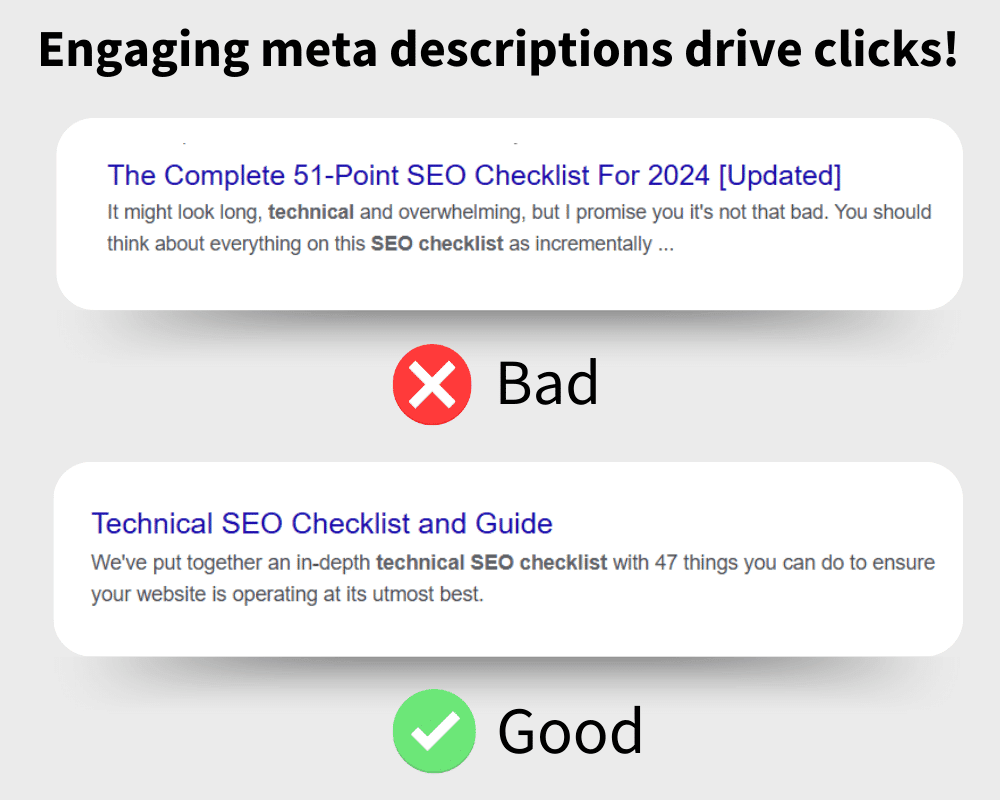
A well-crafted meta description expands on the title tag, providing extra context and details to help searchers understand what to expect. So, a clear & engaging description can significantly boost click-through rates by giving users compelling reasons to visit your page.
Use heading & subheading for content hierarchy
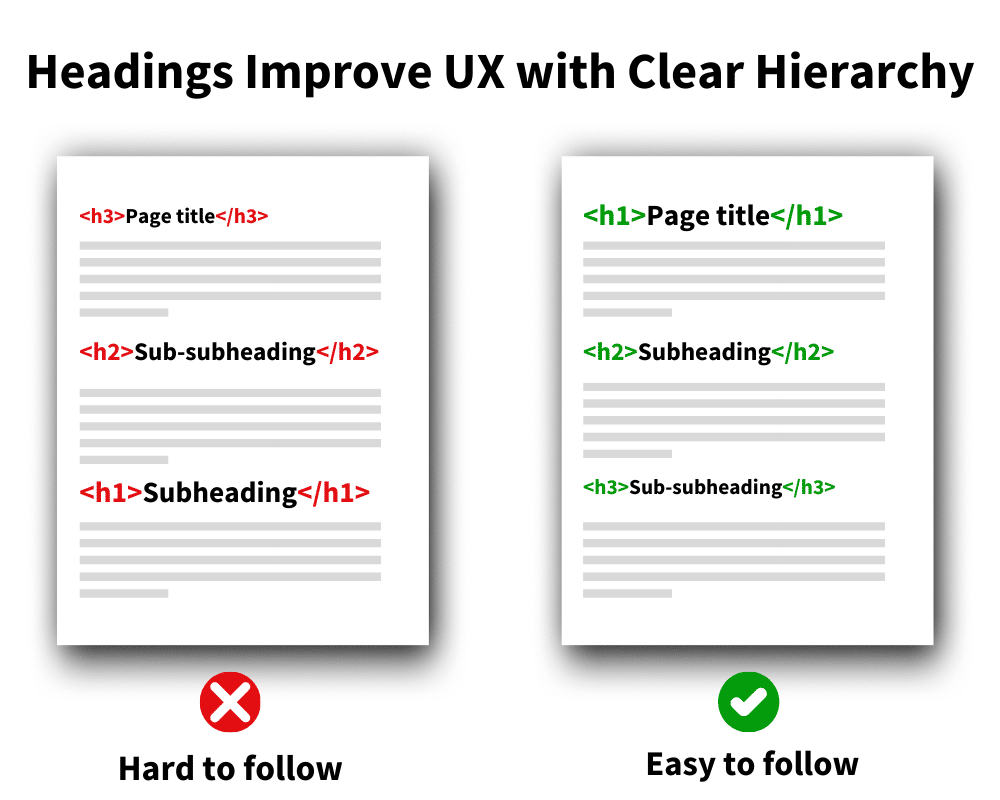
Readers often like to scan your content to get a sense of what it’s about and decide which parts to read or skip. Headings and subheadings help guide them by acting as signposts throughout the content, making it easier to navigate.
Here are some tips for using headings and subheadings effectively:
- Start with H1 as the main title. Only one H1 should be used per page.
- Maintain heading order (H2, H3, etc.) without skipping levels.
- Use headings to divide long content into manageable sections.
- Ensure headings match the content that follows for clarity.
- Avoid using headings purely for visual styling. They should serve a structural purpose.
- Include primary & secondary keywords naturally in headings to boost SEO.
Proper use of headings and subheadings not only improves readability but also enhances the overall user experience, making your content more accessible and engaging for all readers.
Image optimisation for better SEO
Images on your page can help improve search visibility and drive more organic traffic if optimised correctly. To get the best results, focus on a few key aspects of image optimisation.
Use descriptive file names
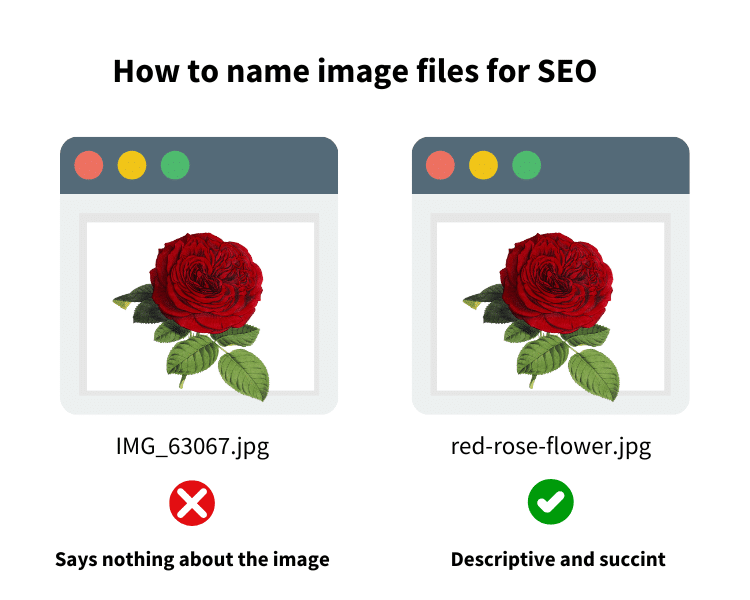
Use descriptive file names for your images to give search engines clues about the subject matter. Avoid using generic file names like “IMG_63067.jpg“. Instead, use something short and informative, like “red-rose-flower.jpg“. This small step makes it easier for search engines to understand what your image is about.
Add alt text for images
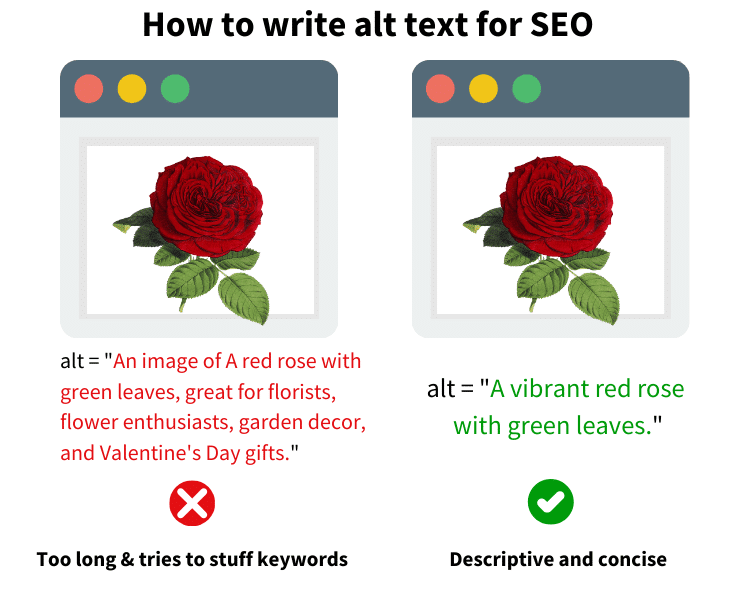
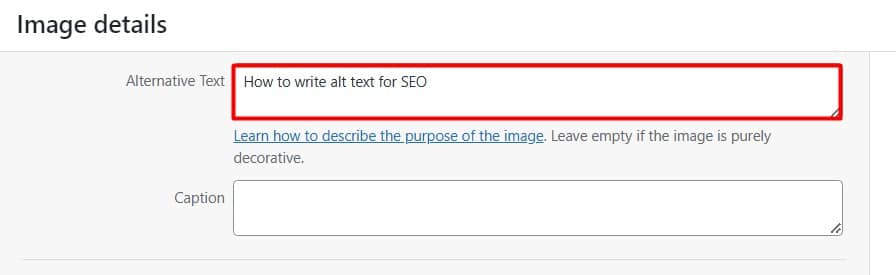
Alt text provides context to search engines and helps them understand the content of an image. It’s also useful for visually impaired users who rely on screen readers. Keep alt text concise and descriptive, ensuring it accurately reflects what the image shows.
Most content management systems have built-in fields for alt text, making it easy to add without dealing with HTML directly.
Proper formats and file sizes
Choosing the right image format and keeping file sizes small is crucial for page loading speed. Use formats like JPEG for photographs and PNG for graphics with transparent backgrounds. Compress images to ensure quick loading times.
Mobile-friendly images
Ensure your images are responsive and display correctly across different devices. Mobile-friendly images improve user experience, which is a ranking factor in SEO. Test your images on various screen sizes to make sure they look good and load efficiently.
Add schema markup
Schema markup is a structured data code that helps search engines interpret certain content on your pages more effectively. By using schema markup, you can help search engines categorise your content, which can lead to improved visibility in search results through rich snippets.
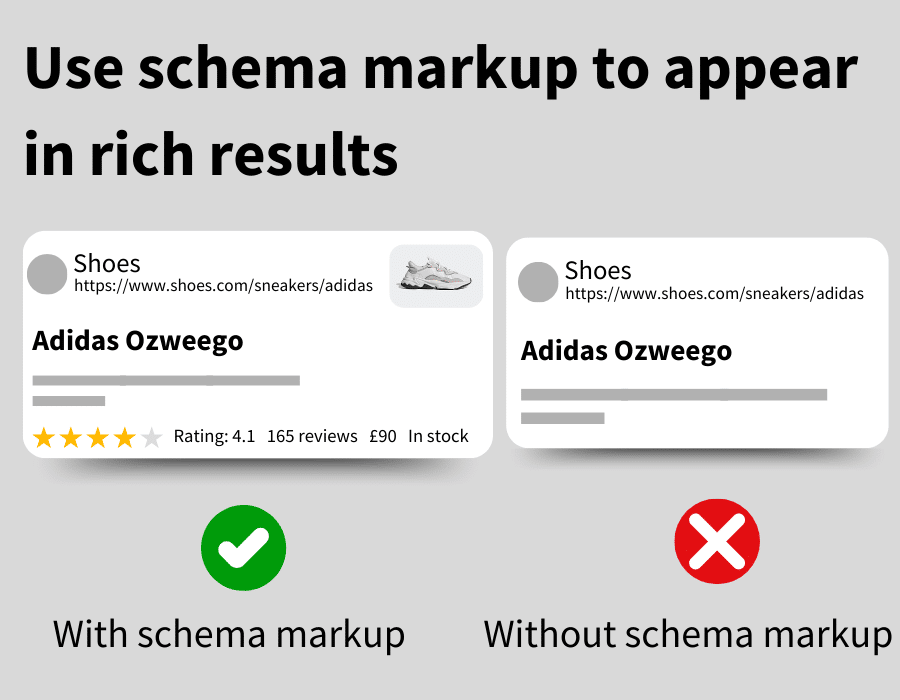
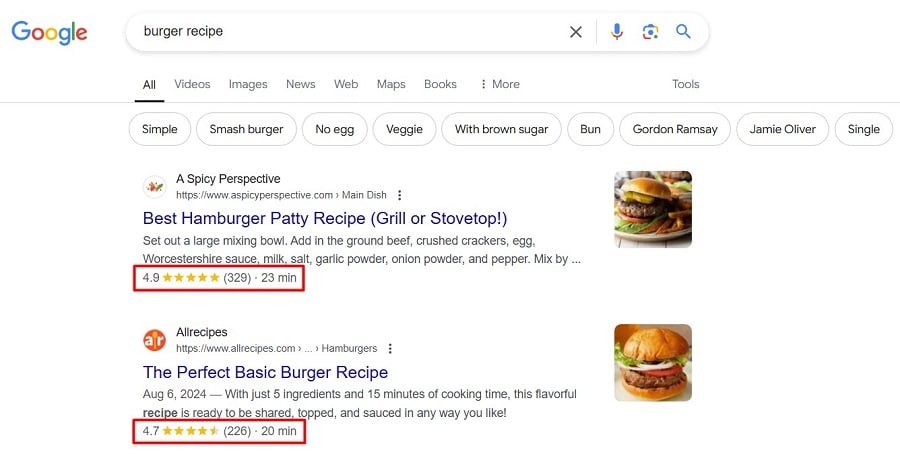
To determine if implementing schema markup is valuable, conduct a search for your target keyword and see if the top results contain rich snippets. If they do, adding schema markup to your page could make it more competitive and likely to capture clicks.
For those using WordPress, adding schema can be quite simple with plugins like Yoast or RankMath. Alternatively, if you prefer a more hands-on approach, tools like RankRanger’s Schema Markup Generator provide a way to create JSON-LD code, which you can add manually to your site.
Geotagging for local SEO
Geotagging is crucial for boosting local search rankings and making your business more visible in local searches.
Listings & citations
Ensure your business name, address, phone number (NAP), website, and descriptions are consistent across all platforms. Consistent NAP details help search engines verify your business and boost visibility. Customer reviews also build trust and influence rankings.
Local content optimisation
Target “near me” searches and create content that is specific to your area, such as local guides or events. Starting a local blog can also help build relevance. Integrate local keywords naturally to boost visibility for nearby users.
Local link building
Collaborate with local businesses and organisations for backlinks. This helps establish authority within your community, improving local rankings.
3. Website Architecture
Website architecture is the foundation of a well-performing site. A well-structured site not only helps search engines understand and index your pages effectively but also ensures a smooth user experience.
Optimising site speed
Site speed is crucial for both user experience and search rankings. Slow-loading pages frustrate users and can lead to higher bounce rates. Additionally, Google considers page speed a ranking factor, making it important to meet evolving standards like Core Web Vitals.
To boost site speed:
- Enable compression: Use Gzip to reduce the size of CSS, HTML, and JavaScript files.
- Reduce redirects: Minimise unnecessary redirects that add extra loading time.
- Optimise images: Compress images without sacrificing quality.
- Use Browser Caching: Store frequently accessed resources to decrease loading times for returning visitors.
Optimising site speed is key to retaining users and ensuring better visibility in search results.
Responsive design
With mobile search volume surpassing desktop since 2016, responsive design is essential. Google prioritises mobile-friendly websites that adapt seamlessly to different screen sizes.
- Google recommends responsive designs as they enhance mobile user experience.
- Ensures your site is accessible and functional on both mobile and desktop, improving usability and rankings.
A responsive design is crucial for meeting user expectations and improving your chances of ranking well in search results.
Improve URL structure
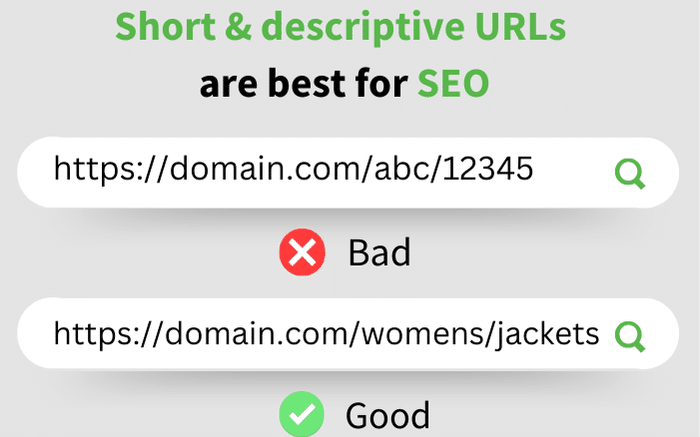
URL structure may no longer be a top-ranking factor, but it still plays an important role in your overall SEO strategy. A clean, well-structured URL can help with initial rankings, make it easier for users to understand, and assist search engines in grouping related pages.
Keep URLs descriptive
Use short, meaningful URLs that describe the content of the page, like domain.com/womens/jackets, rather than random strings like domain.com/abc/12345. Descriptive URLs are more user-friendly and provide context for both users and search engines.
Avoid keyword stuffing
Keywords should be used naturally within the URL without forcing them unnecessarily. Keep it relevant to the page content.
Optimising your URL structure helps improve user experience and allows search engines to understand your website’s content better, which can positively impact your rankings.
Utilise links for SEO
Links are one of the key points of on-page SEO, influencing how search engines navigate and evaluate sites. There are three primary types of links to consider for an effective SEO strategy:
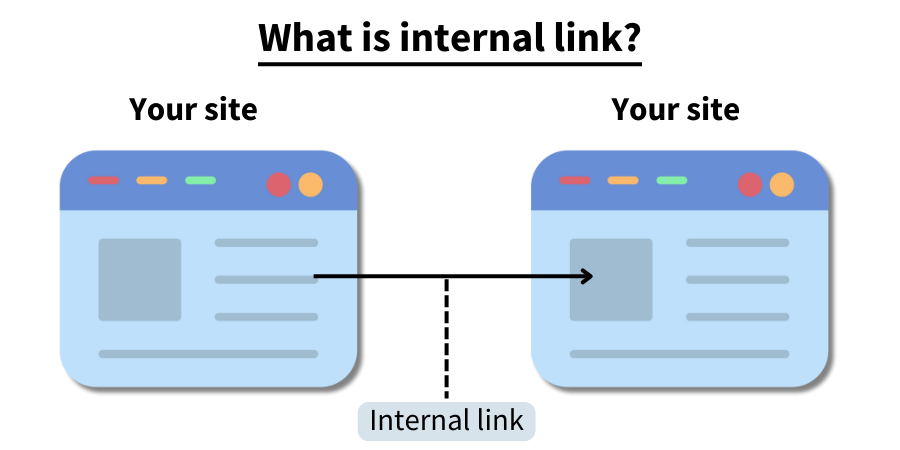
Internal links
These links connect different pages on your website. They help users navigate your content and guide search engines in understanding the structure of your site. Strategically adding internal links from well-performing pages to new or related content can help boost authority across your website.
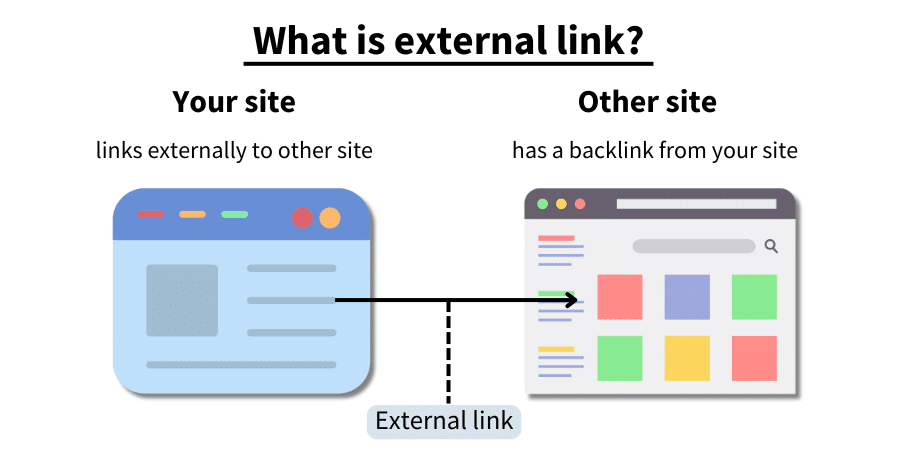
External links
Outbound links that point to other reputable websites can enhance the credibility of your content. Linking to valuable external resources supports the information you provide, adding value for readers and signalling to search engines that your content is well-researched.
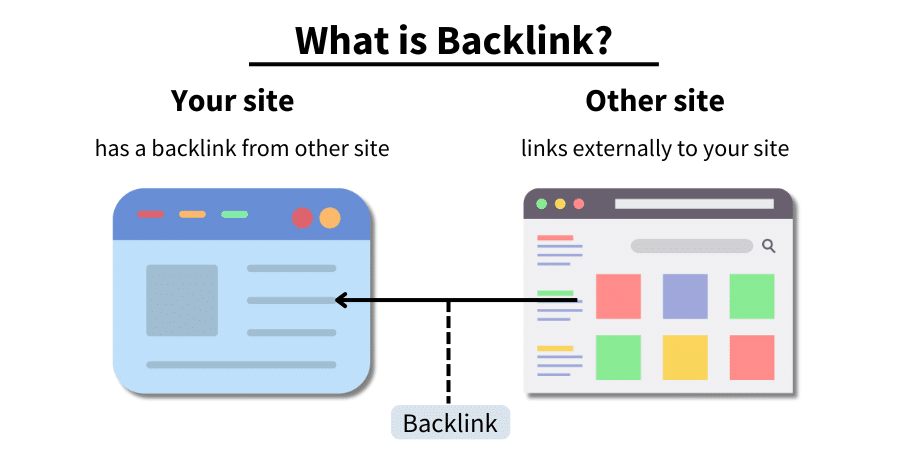
Inbound links (Backlinks)
Backlinks are links from other sites that point to your website. They are often seen as endorsements, helping build authority and trustworthiness. The more high-quality backlinks you have, the stronger your credibility becomes in the eyes of search engines. The number of referring domains can significantly boost your rankings.
Using internal, external, and inbound links thoughtfully can create a well-connected web of content, enhancing both user experience and SEO performance.
Key takeaways
A successful on-page SEO strategy is all about enhancing both user experience and search engine visibility. This involves creating high-quality content that serves your audience’s needs, optimising HTML elements for better search engine interpretation, and building a well-structured website that includes responsive design, effective internal linking, and fast load times.
Regularly updating and refining these aspects will help you stay in line with best practices, ensuring your site remains competitive and visible in search results.
- Autoblock vs Google Consent Mode Categories: Pros & Cons - 22/04/2026
- Privacy Attack Vectors: What are They & How to Defend Against Them - 10/04/2026
- What are the Different Types of Consent? - 11/02/2026