How Much Does Content Marketing Cost? Pricing & Examples

When done correctly content marketing can be an effective tool to pull in an audience. But what exactly is content marketing and how much does it cost? And with so many content marketing strategies, we’ll help you find the one that suits your needs.
What is content marketing?
Content marketing is the process of creating and distributing content assets for your target audience. It’s a broad umbrella term that encompasses many different forms of content. This includes
- Blog posts
- Podcasts
- Case studies
- Videos
- Webinars
- Product demos
Although classed as marketing, not all content marketing is trying to directly sell something. Often, content is designed to be educational and boost traffic acquisition.
Content marketing is about creating content in order to answer your customer’s queries at all stages of the sales funnel. Your content should inform customers before they make a purchase, make them aware of your products or services, help them make their choice and finally retain them as customer’s once they have purchased.
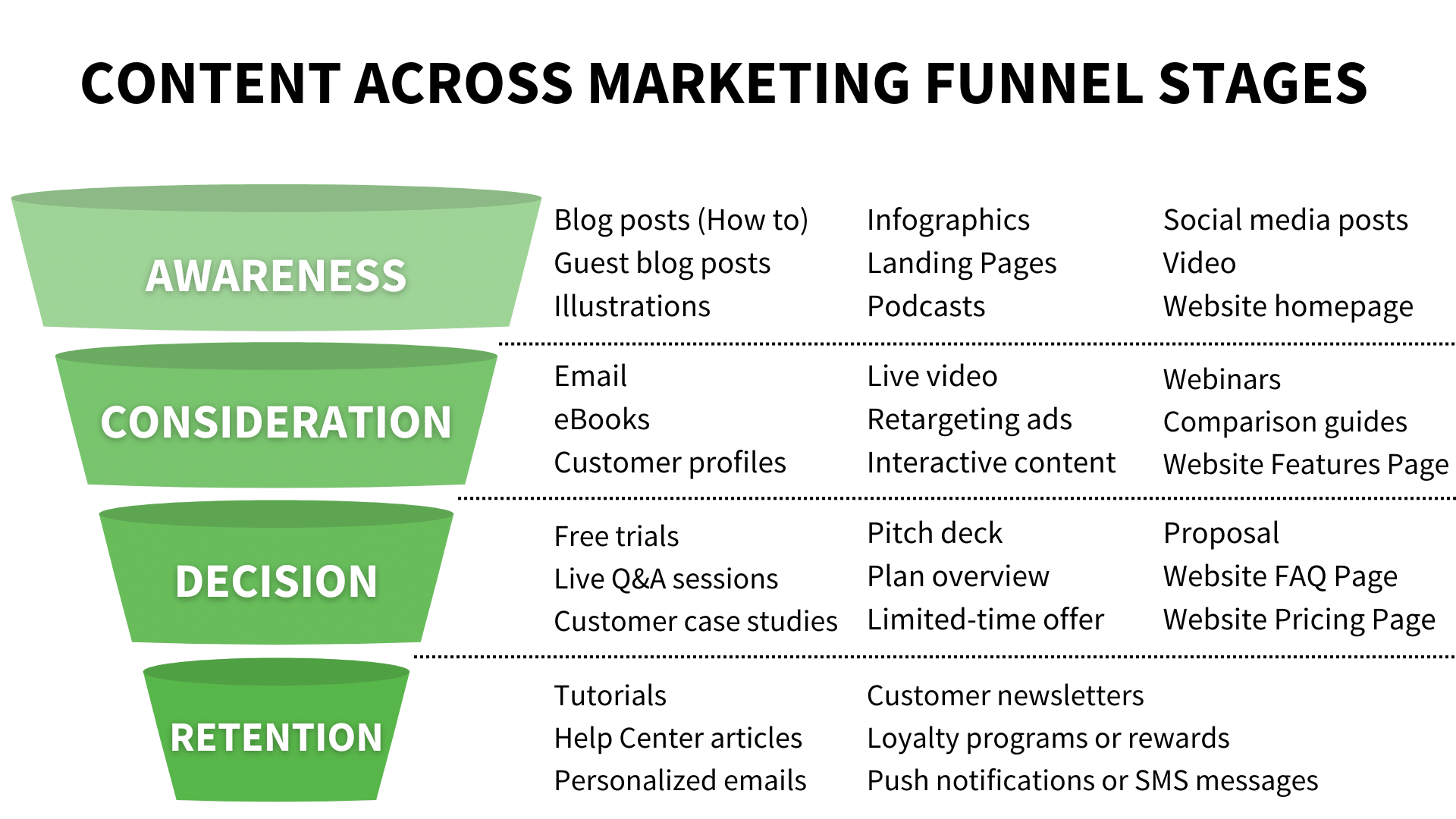
Content marketing often utilises search engine optimization (SEO). With the right keywords and backlinks, you can climb the search engine results page (SERP), boosting brand visibility.
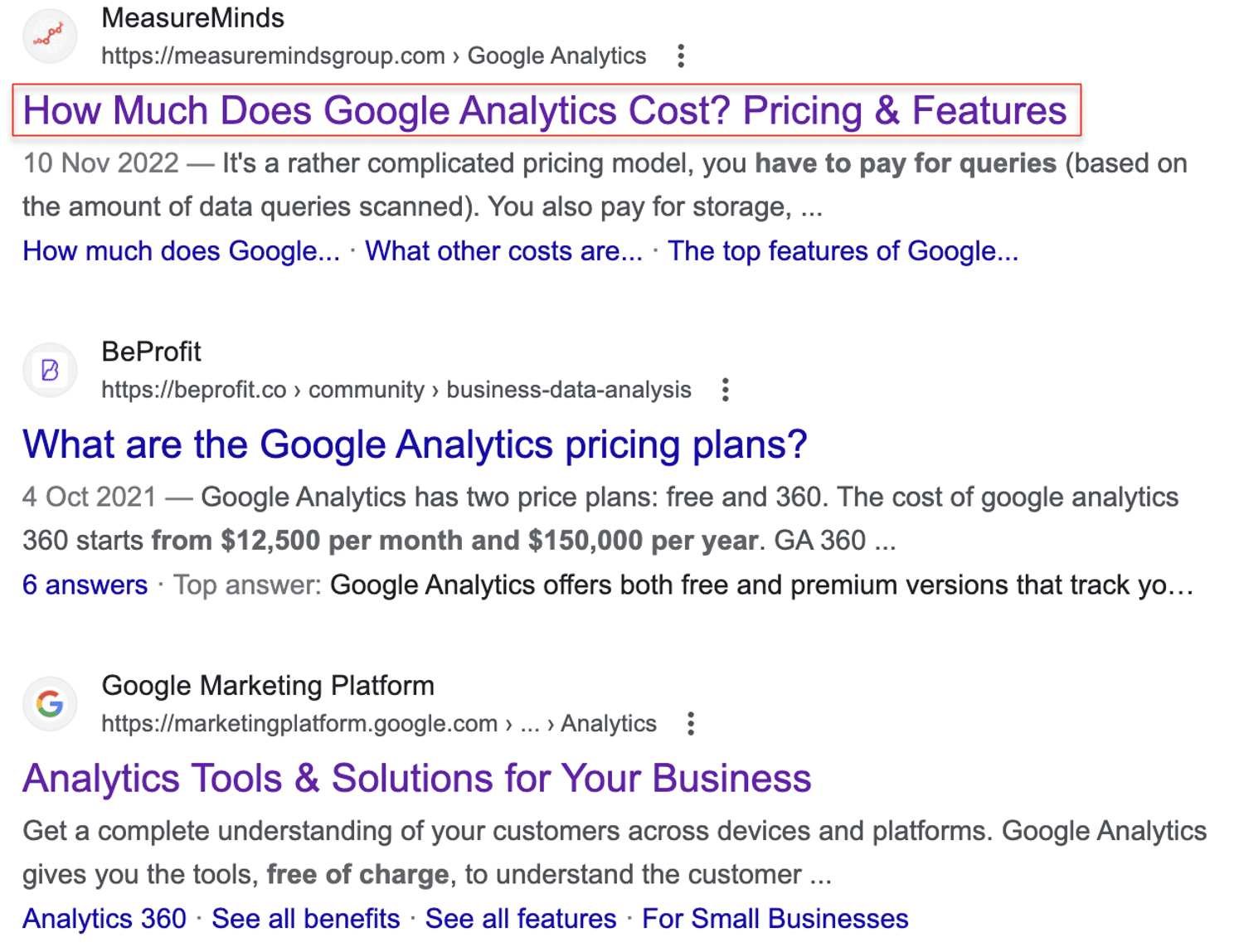
In the above image, you can see that we rank highly for ‘cost of Google Analytics’ a question that our audience may search for, given that we provide Google Analytics implementation services.
How much does content marketing cost?
As with all forms of marketing, content marketing costs depend on a variety of factors. Firstly, it depends on the kind of content that you decide to produce, for example, blog posts are generally cheaper to create than video content creation.
Other factors that might impact cost include:
- Who you hire – Content doesn’t produce itself. Whether it’s video producers, copywriters, or industry experts, you’ll need the help of professionals to create premium content.
- The difficulty of the content – Some forms of content are more difficult to produce. For example, more complex blog posts will require extra research and time.
- Your overall goals – It goes without saying that the more ambitious your goals, the more expensive content will be to produce.
- The content marketing models you use – Different strategies will incur different costs.
With so many different factors at play, prices can vary massively.
Let’s look at different forms of content and some of the factors that will influence their cost.
Blog posts
Cost of blog posts
Overall your content marketing costs should be around £400-£1,000 writing a good quality blog post using a writer and editor and maybe an SEO expert (we will get to that later).
Writers – Writers are paid in two different ways, per word or per-hour. We pay on a per-word basis. You can expect to pay a writer anywhere between £80 and £500 per 1,500 words. Or £15-£40 per hour. The quality of work delivered is generally reflected in the amount you pay. More technical subjects will require writers with technical knowledge. You will pay a premium for this.
Editors – Editors are also paid on either a per-word or per-hour basis. You can also expect to pay a similar rate.
AI – You can use ChatGPT for free. Or you can pay for tools to mass produce articles (not recommended) for as little as £0.50 per article. Some other content tools such as, Quillbot’s AI writer, Frase and Scalenut have AI writing tools built into them now. These can be as little as £18 per month or as high as £400 per month depending on your needs. Tip: Always edit AI content and try to get real people’s input.
Quality or quantity?
Traditionally blogs have been created using a writer an editor and maybe an SEO executive to ensure the article is optimised for search. However recently there has been a surge in the use of AI to create written content.
It is possible to generate thousands of articles in less than an hour with the use of AI and some keyword research using free tools such as ChatGPT. But we don’t recommend this because:
- Search engines are becoming very good at spotting AI content.
- AI just regurgitates existing content which means you are offering nothing unique and original.
- You risk plagiarising.
AI can be useful for fact-checking, finding quick inspiration and editing your written content by summarising or expanding on certain points.
Writing your own content can bring similar issues. Unless you or someone on your team has experience in the field, your content might be low quality.
Ultimately, the goal of content marketing is to pull in an audience with interesting and engaging content. You aren’t likely to achieve that goal by cutting corners and opting for the cheapest solution.
This approach also won’t do much for your SEO strategy. If people are finding your content and leaving instantly, Google might classify this as a poor user experience.
User experience is a top priority for Google. The platform will actively penalise poor-quality websites so that they don’t appear as highly in the SERP.
Formatting and design
You might have a fantastic and well-written article but readers won’t stay on your site if it’s low-quality. They will likely assume the same of your content.
Try to bear the following factors in mind for your design.
- Use colour – (but not too much) – Choose a colour that can complement your post, draw attention to important areas, and set the right mood. On the other hand, too much colour can be distracting. It’s all about striking a fine balance.
- Use high-quality images – Low-resolution, blurry images won’t do any favours for your blog, always aim for quality. Try to avoid being overly generic. Whilst stock images can suit certain scenarios, they’re not usually a sign of quality.
- Choose shorter paragraphs – Lengthy paragraphs can overwhelm some readers. They want to quickly find the information they need and go. Try to stick to paragraphs that are 3-4 lines in length.
- Pagespeed – Is a critical ranking factor and is one of the leading causes of high bounce rate. Users will leave the website if it takes too long to load.
- Vary your formatting – Break up text with images, videos, FAQs, quotes, bullet points, and numbered lists.
Video content marketing price & methods
Video production costs
Video content marketing costs can be very high. From our experience, you can expect to pay £1,000 and £5,000 for a 120-second video. But this can be more expensive due to a number of reasons:
- High-quality audio and 4k video.
- Quality of graphics, animations, and other visual effects.
- Music licensing.
- Actors/influencers.
- Writing, directing and producing.
The more you spend, generally the better the return is going to be. You need to understand if the ROI is going to be worth it.
Influencer’s impact on marketing
You don’t need to feature an influencer in your video, but doing so does have proven benefits. Let’s look at one example. In 2022 the enterprise work management platform Smartsheet wanted to boost awareness of their integration with Microsoft Teams.
To do so, they hired industry experts to appear in their video marketing, explaining how the integration helped them. The result was a resounding success, pulling in 10,259 page views and 23,000 video views. The company also achieved a 30% increase in app downloads.

The cost of influencer marketing ranges dramatically depending on the size of the influencer. Below is a rough pricing guide. In some cases, influencers might be willing to offer discounts for long-term partnerships.
- Nano – Have up to 10,000 followers and usually range from $10 to $100
- Micro – Have between 10,000 and 100,000 followers. Generally range from $100 to $500
- Mid – Have between 100,000 to 500,000 followers. Range from $500 to $5,000
- Macro – Have between 500,000 and one million followers. Range from $5,000 to $10,000
- Mega – Have upwards of one million followers. Range from $10,000 onwards.
Be considerate about the influencers you pick. Some influencers in the same niche as your brand may have their own things they are looking to promote. In these cases, they would be willing to come on your podcast for much less, if not free.
Podcast
Equipment and software
Podcasts can be a fantastic form of content marketing and building a loyal following. Consumers build podcasts into their daily routine, listening on their way to work or before bed.
The most successful podcasts have one thing in common; they sound great. Because of this, consumers expect a certain level of quality. Using your laptop’s microphone might be cheap but might put listeners off. But reaching the quality that you need can be expensive.
Although important, simply buying a high-quality microphone won’t be enough. There are a variety of other expenses to bear in mind. This includes:
- Recording and editing software.
- Artwork for your podcast’s thumbnail.
- Licensed music and sound effects.
- Maybe a producer.
For the best quality podcast, you might be paying an average of £5,000, but the total cost will depend on how many episodes you want.
Advertising your Podcast
People are unlikely to just stumble across your podcast. Posting on your own social media channels helps, but if you want to expand your reach you need to advertise.
Podcast ads are usually played on other podcasts that cover similar topics. There are three types of ad placements to consider, with each ad placement having its own pros and cons. These are
- Pre-roll ads – played at the start of the podcast and range between 15-60 seconds long. These ads can be expensive as they often attract the highest number of listeners. The cost of a pre-roll ad averages between £15-$20 cost per mile (CPM).
- Mid-roll ads – Played in the middle of the podcast and range from 30 – 60 seconds in length. As these ads are usually longer, they are the most pricey costing around £30CPM.
- Post-roll ads – Played at the end of the podcast and range between 30-90 seconds. They are the least expensive option, as they attract the smallest number of listeners. Post-roll ads cost an average of £10CPM.
Infographic
Design and research
An infographic can be a great way of feeding quick information to your audience, and they’re generally quicker to produce than a video or blog, and can even help with link building.
That said, there are a number of factors that influence the cost. You’ll need the help of a designer who can bring your vision to life. There’s also the content research cost to consider. Infographics must provide accurate and up-to-date facts.
With a wide price range between £800 and £4,000, infographics can be a cheaper way to bring content marketing costs down.
Animation or no animation?
Another factor impacting the price of your infographic is whether or not you decide to include animation.
Animation can be a great way of improving your infographic. It also, however, increases the overall price. For a quality animation, you’ll need to hire a professional graphic designer. Adding animation to your infographic is charged per minute, and can quickly bump up the costs.
Research
Research costs for content marketing can be next to nothing or they can be incredibly high depending on:
- The type of research – surveys, analysing a case study, experimentation etc.
- The scale of the research – 100 people, national, niche-specific (only marketers) etc.
- How long you conduct the research for.
It’s difficult to really pin down a specific number for the cost of research as it can be so drastically different. From first hand experience, we have seen companies pay £10-£50 per person for their feedback.
It’s important to consider these costs in your content marketing efforts as some form of research is involved in almost every form of good content marketing.
Employees – should you hire full-time?
For your content marketing efforts, you may want to consider hiring the following. Some of which we have mentioned before. First, we will list the yearly average salary for Glassdoor Salaries across the UK. Then we will list the average costs on Upwork (here is an example from Upwork).
Full-time
Content writer – £21K – £32K
Content editor – £23K – £35K
SEO executive – £22 – £29K
Graphic designer – £23K – £34K
Video editor – £23K – £36K
Podcast producer £28K – £47K
Contractor
Content writer – £12 – £33 per hour
Content editor – £12 – £33 per hour
SEO executive – £12 – £29 per hour
Graphic designer – £12 – £29 per hour
Video editor – £8 – £49 per hour
Podcast producer – £16 – £25 per hour
Which should you hire?
It depends on your content marketing needs. You’ll need to assess this against your business needs and budget. Generally, full-time employees are cheaper but are only worth it if you have a steady stream of work. With contractors, you can use them as and when you need them.
That being said, contractors are less reliable and the turnover can be much higher meaning that you may need to train and familiarise new contractors every so often. A full-time employee will gain a deep understanding of your business needs and goals as time goes on.
You also don’t need to hire anyone. But you need to decide how much of your time you want to spend on these areas instead, or just settle for lower quality.
The best content marketing tools
You should find and deploy content marketing tools to help you in your efforts.
Let’s look at some of the top content marketing tools and their prices.
Semrush
Semrush is one of two SEO tools that are go-to pieces of software for all-round SEO. In terms of content marketing, Semrush offers fantastic keyword research tools to build your content strategy. It also has a content template tool that creates SEO-focused briefs to send to writers.
Here’s an example of the keywords we looked at when we were looking to create articles centered around enterprise SEO:
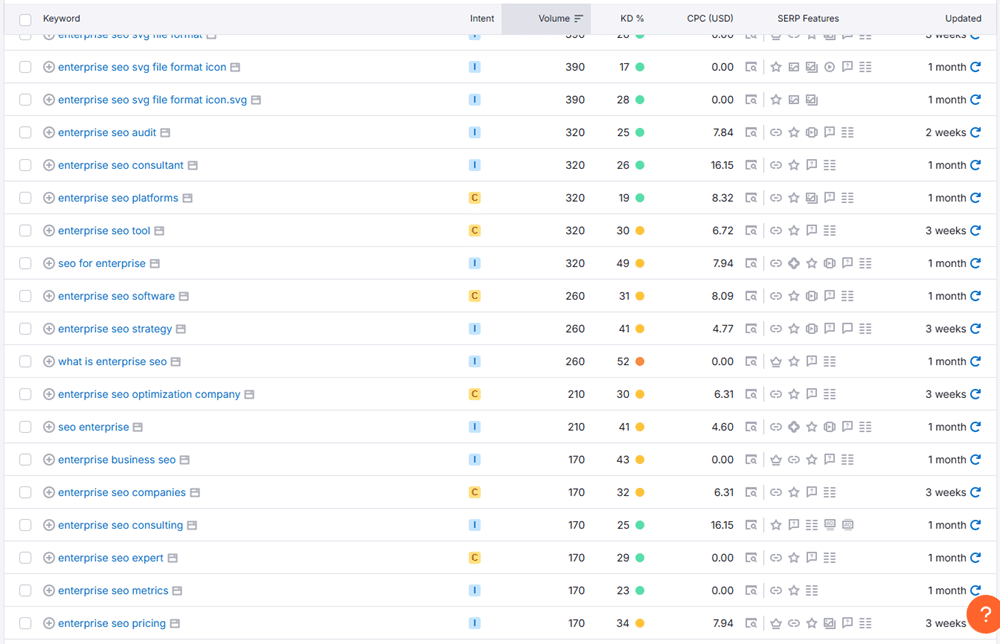
Semrush is fairly expensive starting at £95 per month and going up to £407 per month.
It’ll help you with much more than just content marketing though. Allowing you to perform SEO audits, analyse backlinks, and monitor local SEO to mention a few extras.
Google Search Console; content analytics and much more
We’ve mentioned the importance of keywords in your SEO strategy. This marketing tool will help you identify which keywords you should use and which are the most relevant for your content., making it the perfect tool for keyword research.
Google Search Console (GSC) is one of the best SEO tools used by agencies. It can provide comprehensive keyword lists as well as identify sitemap issues, content types, and more.
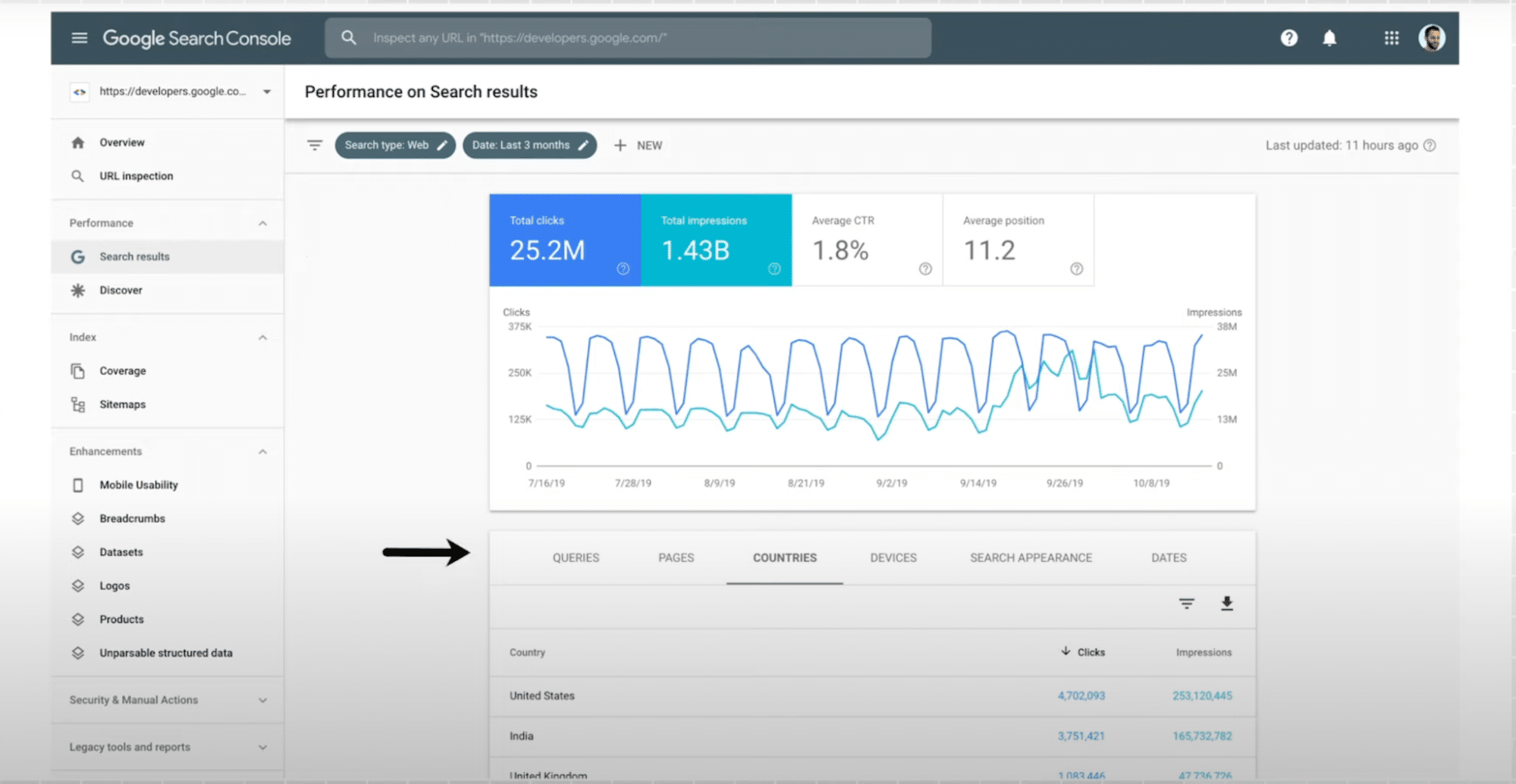
Pricing: Google Search Console is completely free and you’ll get access to data supplied by Google.
Google Analytics; content analysis and research
Google Analytics can be a great marketing tool to help keep your content updates cost down, by performing detailed content audits. When used right, it can help you identify which pieces of content need updates which can result in an easy win.
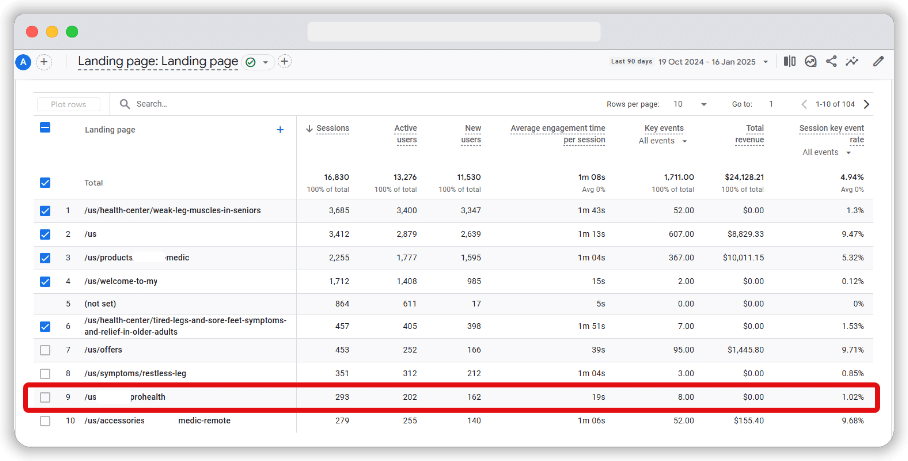
It can also help you identify content that isn’t working, making it easier to create a content marketing plan and keep your content marketing costs down, without needing to increase your marketing budget.
While GA4 might have a steep learning curve, once mastered, it can help you identify quality content, and make sure your content marketing efforts aren’t wasted.
Google Analytics Pricing: Google Analytics is completely free and gives you complete access to your content’s visitor data. You can buy a premium version of GA called GA360 but this isn’t recommended for most businesses.
Canva; content personalisation and image design
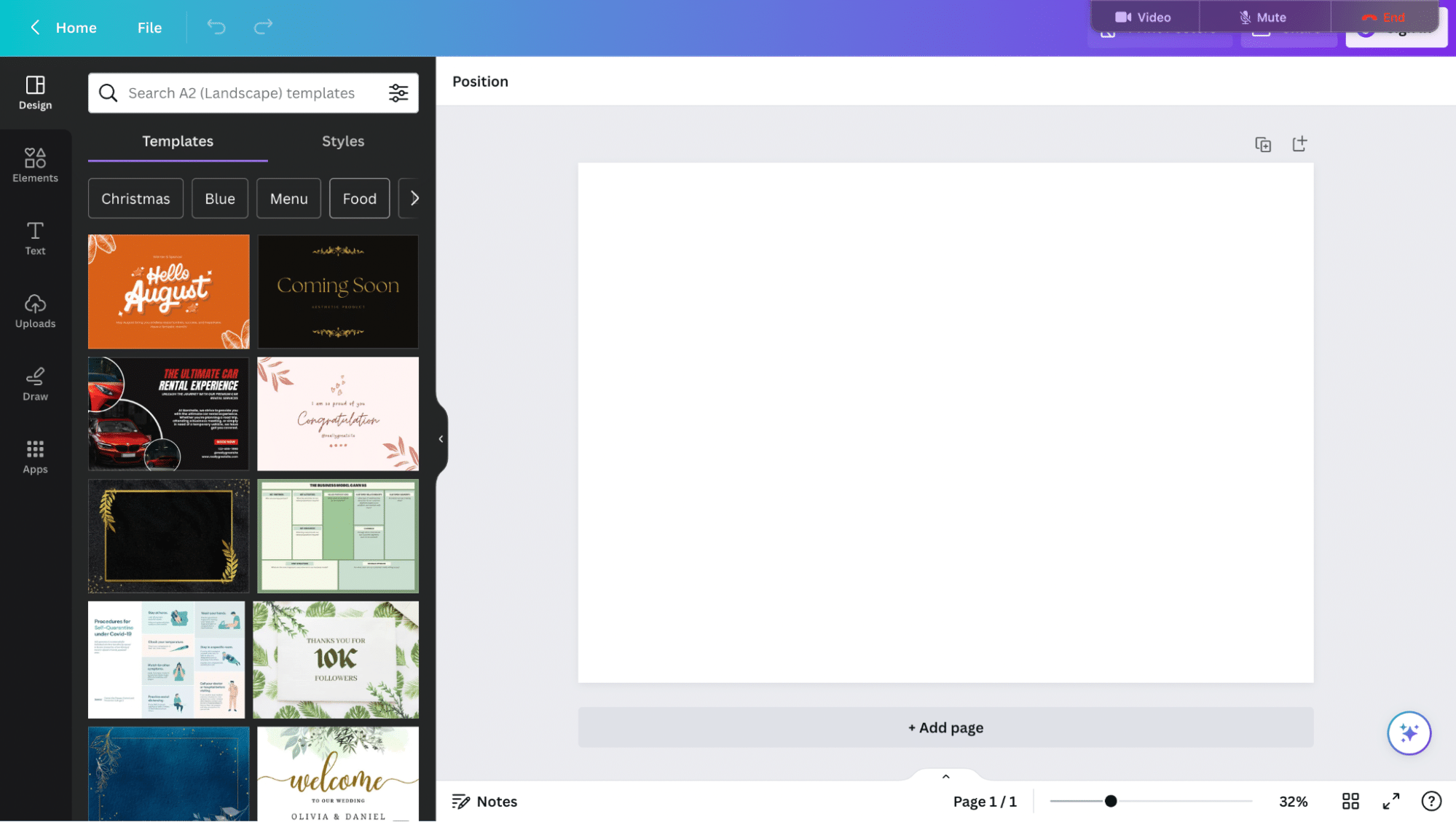
As previously mentioned, content is improved by including quality visuals. Canva is a tool designed so even novices can create appealing images and GIFs.
Canva provides access to thousands of templates, so users can easily jump in with a design that meets their needs. Alternatively, you can start from scratch and create your own visuals.
Pricing:
Canva comes with a free version including some basic features. For full access, you’ll be paying £119 per year.
Content marketing services
Content marketing services generally provide you with a full-scale content marketing campaign. This can involve multiple forms of media such as blogs, videos, podcasts etc. But usually, an agency just focuses on one. MeasureMinds for example focus on blog posts as part of their enterprise SEO services.
Each agency will charge different prices for their services and the cost will also depend on your demands. Content marketing services usually start at around £2,500 per month.
FAQ
Where can I get help with my content marketing?
It’s okay to ask for a little extra help sometimes. Crafting a winning content marketing strategy isn’t easy. Luckily, MeasureMinds is on hand to help you. Our content marketing services provide digital content strategies that combine data-driven insights with intuitive expertise.
We’ll help you create a content plan, complete with keywords, meta tags, and other factors that make your content more likely to convert. Why not get in touch, and craft your strategy today?
Does content marketing help SEO?
Content marketing can play a big role in your SEO strategy. High-quality, regularly updated content featuring a mix of well-chosen keywords, backlinks, and meta tags can massively boost your SERP ranking.
As long as your content writing follows SEO best practices, it should help boost your SEO.
How do I ensure people find my content?
Your marketing will depend on your audience, budget, and the style of your content. You should begin by creating a sound content strategy report. This should encompass your wider goals. Choose the right set of key performance indicators (KPIs) to help you, and continuously refine your strategy as you progress.
Which KPIs are useful for content marketing?
There are a variety of KPIs that can help measure the success of your content marketing campaign. Here are some examples.
- Organic traffic – Is your content effective in bringing new users to your site?
- Referrals – If your content is appealing enough, users will start sharing online. Content with a high number of referrals indicates that you’ve covered a hot topic.
- Inbound links – As you start to establish your name online, other sites will start linking to your content. The more inbound links you have, the more you’ll be seen as a dependable source.
- Conversion rate – Which articles are most effective in persuading users to convert?
Wrapping up
How much does content marketing cost? The answer, perhaps unsatisfyingly, is ‘as much as you want’. A successful content marketing campaign that gets you to the top of the SERP ranking will likely cost thousands depending on the keywords you are targeting. Of course, you can still spend less and have a respectable campaign, but it’s unlike to raise as much brand awareness
Ultimately, the next step in your content marketing all depends on strategy. You can pour in as much money as you want, but without a clear roadmap, you’re bound for failure. So, take time to plan. Consider your objectives, audience, and budget. Remember that outside help is always available if you need it.
So, why not get to work on crafting a cost-effective and targeted content marketing campaign? We promise you won’t regret it.