Use Zero Party Data: What to do Once You Have it

Second party, first party and zero party data can provide lots of valuable insights. But to make data-driven decisions, you need full visibility over your data and a clear plan of how you will use it. Here’s how you can use your data to its fullest.
These insights are mostly a write-up of JJ Reynolds’ talk at Privacy4Marketers. You can find his YouTube recording below:
What is zero party data?
Zero party data is any information that your users willingly give you. This includes information gathered from form submissions, purchases, surveys, and other sources. Zero party data is a useful window into the wants and preferences of your audience. It can help optimise your customer journeys and create more targeted and streamlined user experiences.
Zero party vs first party vs second party vs third party data
Now, let’s compare zero party vs first party data. First party data is information a company collects about its audience. Examples include insights about a user’s behavior on your website, engagements with the sales or customer support team, and purchasing history.
Alongside zero and first party data, you have second party data. This is when a partner organisation shares its first party data with your organisation.
Lastly, you also third party data. This relates to information gathered from external sources that have no link to your business or its audience.
The usual problem with zero party data
Organisations use many different types of tools to collect different sorts of data. Let’s look at some of the different tools your organisation might use.
- Your CRM – Contains records of transactions and customer emails.
- Your web analytics tool – holds information about trends and patterns in user behaviour.
- Screen recording tools – used to track individual user journeys.
- Website forms – Capture leads, which are forwarded to external tools.
The issue, however, is that these tools fail to communicate with one another. With so many data streams, information becomes harder to keep track of. With the rise of data protection laws this is an area that you don’t want to fall short in.
Finding the solution
You need a way of unifying data so it becomes easier to “see”. Alongside this, you need to systematise how a user is a user. As we’ve explored, you likely have data about users from a variety of sources, such as your website, app, and CRM.
Lastly, you need to match consent with its essence. In other words, you need to make sure that all the pieces in your consent management setup (eg, are form submissions hashed correctly? Is the consent status hashed correctly) are singing the same tune.
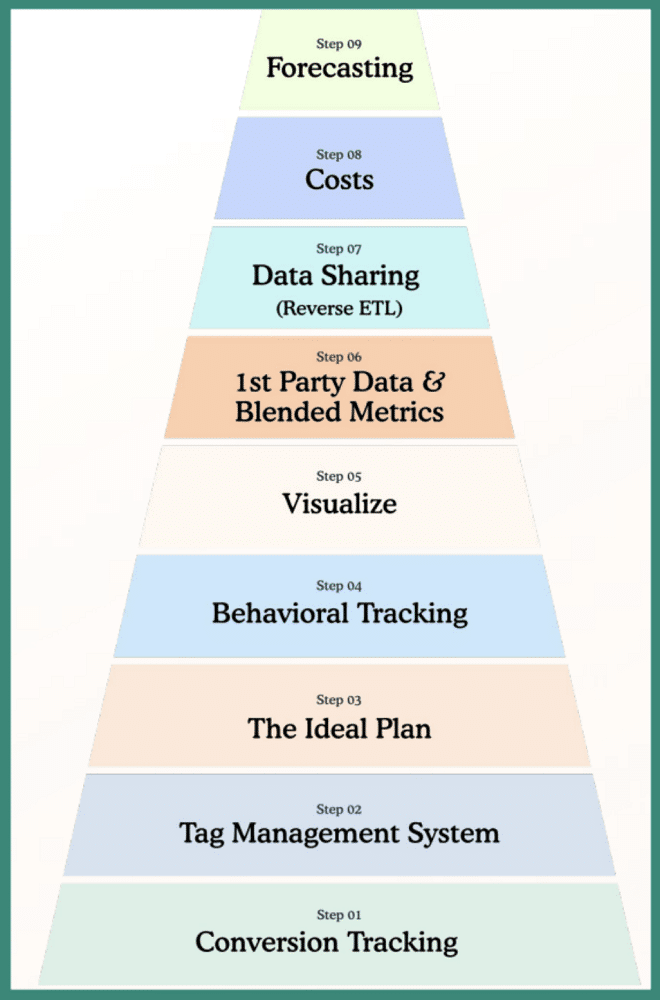
To deal with these issues, Vision Labs created a ‘data order of operations’, outlining nine different steps. Your goal should be to unify these steps. When successful, you’ll be able to identify a single location and system for identifying users.
The outcomes of your data
Whether you’re dealing with zero party vs first party data, you’ll have a set of outcomes. Here are three potential outcomes that we recommend.
1. Field useful questions
As a business, you will have new questions and ongoing questions. These should be relevent to your current strategies and objectives. For example, when you create a form, you should ask ‘what actions am I looking for?’
2. Drive data pipelines
Whether it’s ad platforms, marketing automations, or your systems, you need to drive your data pipelines. In other words, you should be using data to either automatically or systematically improve your systems.
3. Make an impactful action
What is the outcome of all your efforts? What can you do with the data you’ve collected? You need to identify an action to use your data meaningfully.
Structuring your data
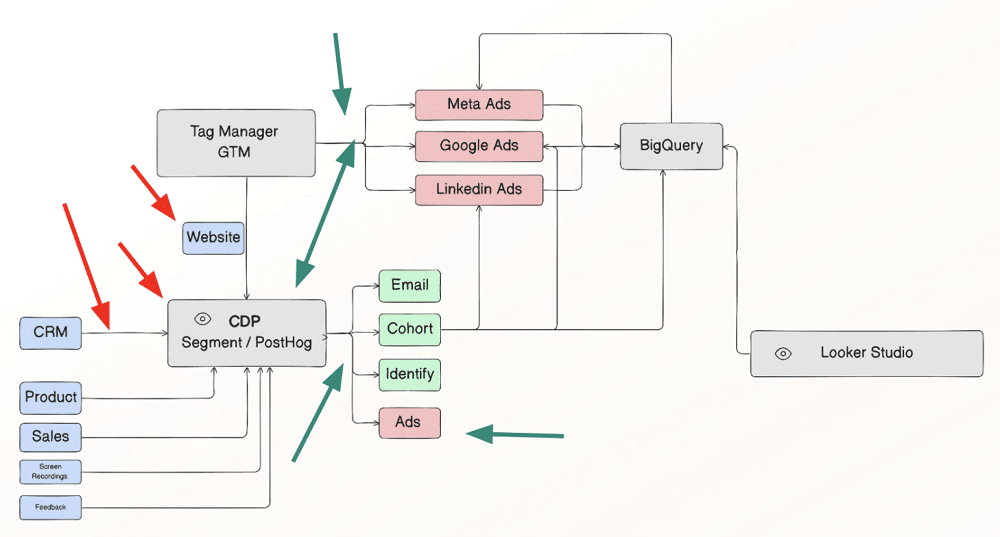
Pictured below is an example of how Vision Labs structures its data. As you can see, many different inputs are listed, such as your CRM, screen recordings, and feedback. You need to identify a tool, such as Segment or PostHog, that can unify these inputs.
The information collected from these sources can be used for a variety of purposes. You could, for example, use it to feed your ad platforms to create more targeted advertising. You can also
- Feed data to your ad platforms for more targeted advertising.
- Send emails to relevant groups of users.
- Create cohorts of users that are likely to carry out certain actions.
- Identifying opportunities for future events.
The red areas of the model signify the need for consent to store data used for advertising. When your data is structured properly, you make sure that the data is being collected in a compliant way. It’s also much easier to track down and delete information when requested.
Vision Labs recommends that you feed all your data into a tool such as BigQuery, as well as plug in Looker Studio. This way, you have complete ownership of your data and can control which pieces of information are sent to third parties.
The importance of making the case
A key part of compliance is demonstrating consent alongside a credible case for collecting second party, first party and/or zero party data. Too many businesses don’t have a legitimate reason for their data collection.
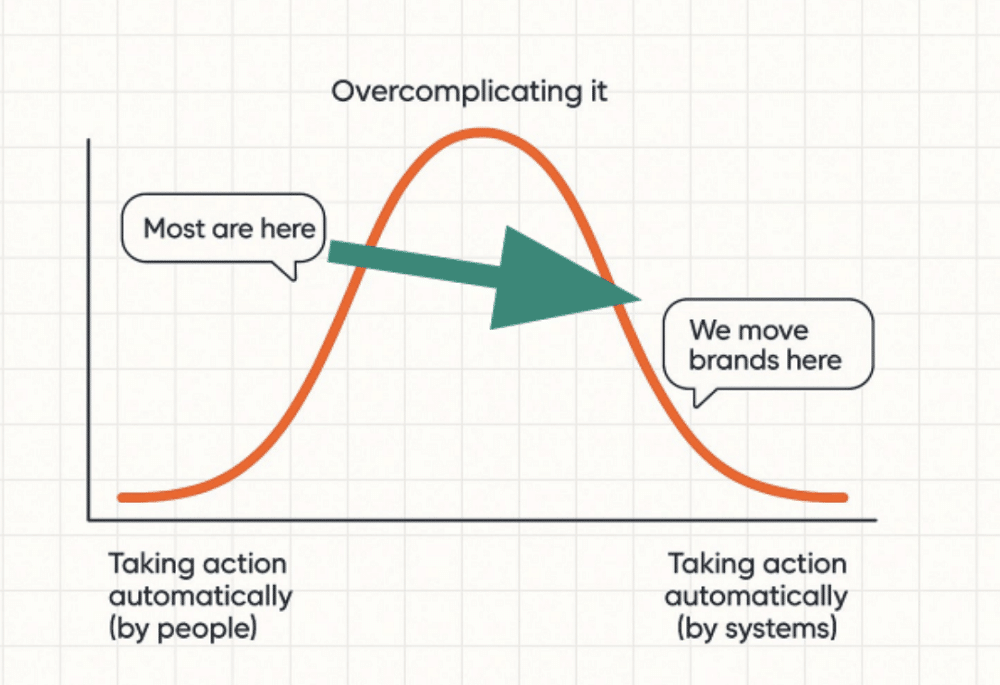
Simply having data isn’t enough. You should understand why you need the information and how you will use it. It’s easy to overcomplicate the process of solving consent. Working with a team such as Vision Labs can help make things simpler.
When making the case for your data collection, its useful to ask a set of questions. These include:
What are you trying to do?
Understanding your overall goals is key. When outlining your plans, try to be as granular as possible. Start at the end and go backwards.
For instance, your overall goal might be to persuade users to book calls with your sales team. Consider the different steps a user might need to follow to reach this stage. They might visit your website, download a PDF, and try a demo. By understanding these steps, you’ll know the sorts of data you need to optimise the journey.
When gathering your data, there are three core areas to consider.
- Insight – Which lead magnets are driving the highest adoption rates? Which platforms are driving these leads?
- Correlate – What content, features, or consumption is driving the highest 90-day LTV?
- Action – Send emails immediately after high-value actions for “X, Y, Z”
How will you do it?
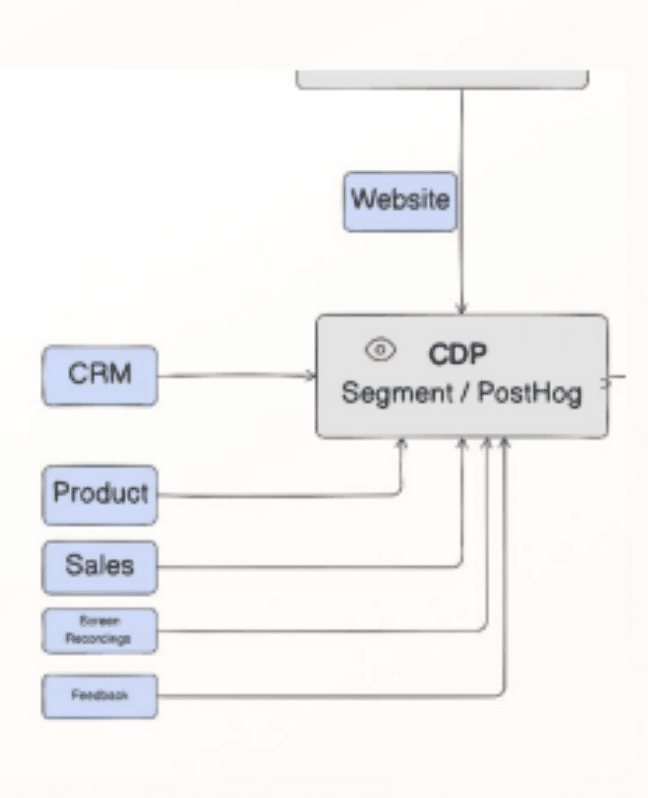
Let’s go back to our earlier example of Vision Lab’s data structure. Focus on the areas marked in blue; these are the areas you need to map out first. These points should clarify
- What roles do different pages play?
- What roles do automations play?
- How do lead magnets work in your data structure?
- How do webinars play a role?
Map these different steps to a centralised location. By being as granular as possible, you can understand the insights, actions, and automations that will lead you to success.
What will you do with this information?
Ultimately, if you don’t know what you will do with the information you gather, don’t collect it. You may need to improve your marketing prowess to understand how data can be useful. As we’ve established, it’s much easier to justify your data collection if it has a clear purpose.
What will you do next?
You’ve gained insights from your data, but will it help you going forward? This isn’t always something you can glean from a table or visualisation. For example, the image below shows an example of an internal Vision Labs report.
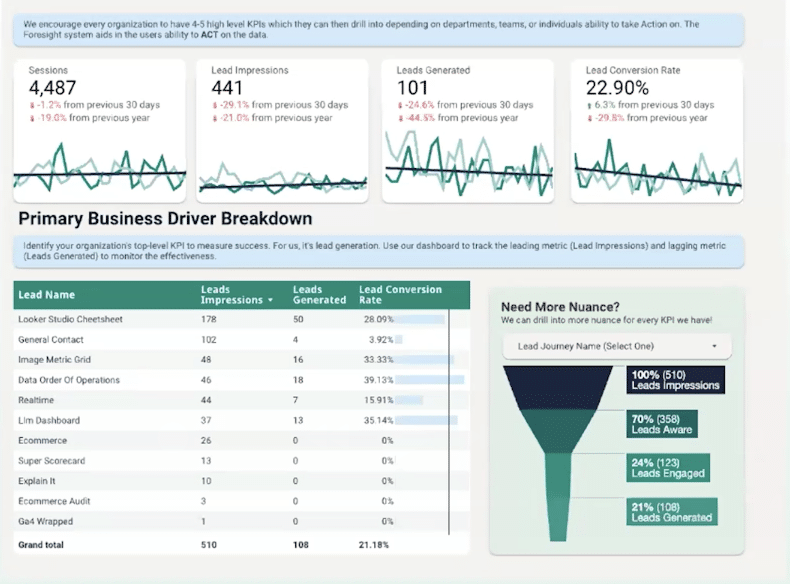
As you can see, sessions, lead impressions, and lead conversion rates are all down. Despite this, though, the quality of Vision Labs’ leads has been going up as content becomes more specific to people who can do something with it.
Obviously, this is an insight that is harder to represent in a dashboard. To understand these nuances, we need to go back to our earlier questions, ‘What are we trying to do?’ and ‘What is the outcome?’
Wrapping up…
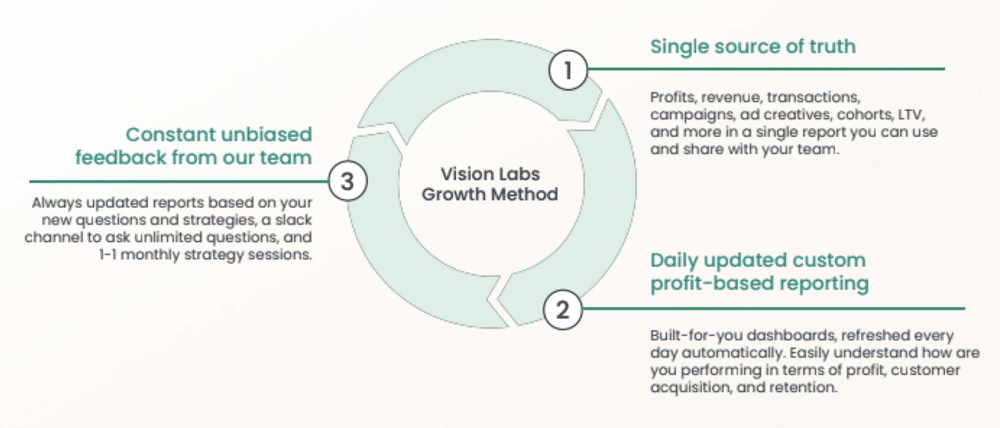
Simply having data isn’t enough. For compliance, visibility, and to make data-driven decisions, you need a clear structure and a single source of truth. That’s where Vision Labs comes in.
Vision Labs has a four-week program for creating an audit and custom plan for mapping your second party, first party, and zero party data into an order of actions. They’ll work with your team to review, test, execute, and build a document you can share with your team. Get in touch to learn more.
About the speaker
JJ Reynolds, Founder of Vision Labs, is obsessed with turning data into actual business results.
As an expert in data visualisations, customer journeys, and marketing optimisation, JJ brings a no-fluff, real-world approach to maximising every insight organisations collect. He’s on a mission to help brands move beyond “data hoarding” and start using their data in ways that drive real, measurable growth.

